

The New Face of Youth Gambling
 Eda Koselleck
Social Media, Gaming Apps and Regulatory Challenges

Introduction
The digitalisation of gambling has transformed the ways in which young people encounter gambling-related activities. Unlike traditional forms of gambling, which were largely confined to casinos, betting shops and lotteries, contemporary gambling opportunities are increasingly embedded within social media platforms and mobile applications. As a result, children and adolescents are exposed to gambling-like mechanisms long before they reach the legal age for gambling.
This development has generated growing concerns among researchers, healthcare professionals and policymakers. The convergence of gaming gambling has blurred traditional regulatory boundaries, while the accessibility of online platforms has created new risks for vulnerable users. At the same time, emerging evidence suggests that early exposure to gambling-related activities may contribute to the development of problematic gambling behaviours later in life. These developments raise important questions concerning consumer protection, age verification, advertising regulation and the responsibility of technology companies operating within the digital economy.
The Gamblification of Digital Entertainment
One of the most significant changes in recent years has been the incorporation of gambling-like features into products that are primarily marketed as entertainment. Many young people now encounter gambling mechanisms not through casinos but through video games, social media platforms and mobile applications.
Loot boxes are among the most widely discussed examples of this phenomenon. They are virtual packages containing randomly generated rewards that can be obtained through gameplay or purchased with real-world money. Because the contents remain unknown until the box is opened, the outcome is determined largely by chance.
Although loot boxes do not always involve direct monetary prizes, they replicate many of the behavioural mechanisms associated with gambling. Players pay for an uncertain outcome and experience anticipation and excitement when opening the box, which is the reward. Research has demonstrated a relationship between spending on loot boxes and increased gambling severity among adolescents, leading many scholars to question whether such mechanisms should continue to fall outside traditional gambling regulations.
Microtransactions further contribute to this environment by encouraging repeated spending within games. While not all microtransactions involve chance-based rewards, they normalise financial expenditure within gaming environments and familiarise young users with risk-reward dynamics.
Social Casino Games
Social casino games constitute another growing area of concern. These games simulate traditional gambling activities such as poker, blackjack, roulette and slot machines while using virtual currencies rather than real money.
Although these platforms are often presented as harmless entertainment, they frequently provide more favourable odds and more frequent rewards than real-money gambling. This can create unrealistic expectations regarding gambling outcomes and encourage positive attitudes towards future gambling participation. Researchers have argued that social casino games may act as a bridge between gaming and real-money gambling, particularly among younger users who have not yet developed a critical understanding of gambling risks.
Sports Betting and Social Media
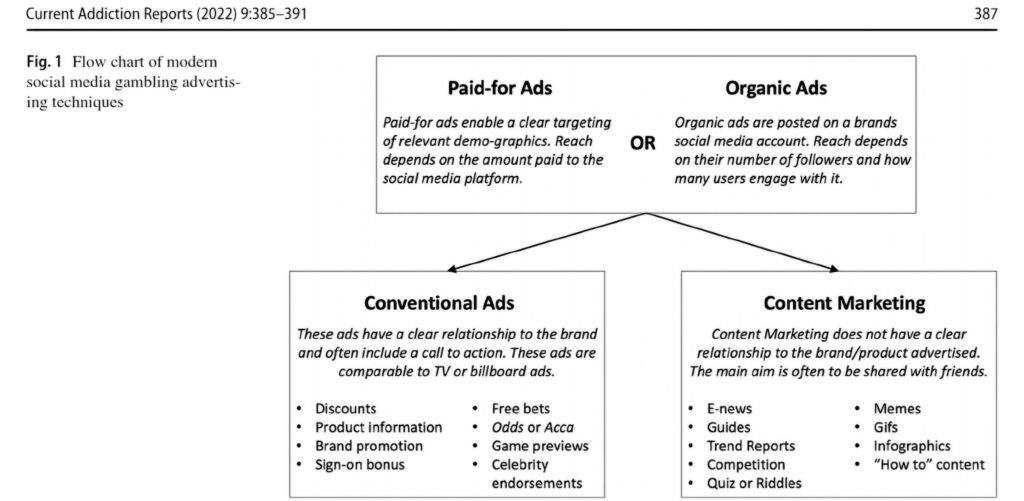
The expansion of online sports betting has further altered the gambling landscape. Betting operators increasingly rely on social media marketing, influencer partnerships and targeted digital advertisement to reach consumers. Consequently, gambling-related content has become integrated into everyday online experiences.
Platforms such as TikTok, YouTube and Twitch expose young users to betting tips, gambling-related content and live-streamed gambling sessions. Unlike traditional advertising, such content is often embedded within entertainment and may therefore appear more trustworthy and less commercial in nature. Repeated exposure can contribute to the normalisation of gambling and reinforce perceptions that betting is a routine and socially accepted activity.
Adolescent Vulnerability and Gambling Harm
1. The Developing Brain
Adolescence is a period of significant neurological development. Brain regions responsible for impulse control, long-term planning and risk assessment continue to mature well into early adulthood. At the same time, adolescents display heightened sensitivity to rewards and novelty. This imbalance can make young people more responsive to the immediate gratification associated with gambling-like activities. Unpredictable rewards trigger dopamine release, reinforcing behaviour and encouraging repeated engagement.
2. Mental Health and Risk Factors
Research has identified several factors that increase vulnerability to problematic gambling among young people. These include depression, anxiety, trauma, substance use, impulsivity, attention-deficit hyperactivity disorder (ADHD), family gambling problems and social isolation.
3. Long-Term Consequences
The consequences of youth gambling extend beyond financial losses. Studies have linked problematic gambling behaviour to academic difficulties, family conflict, emotional distress, substance misuse and impaired social functioning. Adolescents experiencing gambling problems have reported higher rates of suicidal ideas and attempts than their non-gambling peers.
Regulatory Challenges in the Digital Age
a) Age Verification Requirements
Most jurisdictions prohibit minors from participating in regulated gambling activities. However, enforcing age restrictions on online platforms remain challenging. Traditional gambling operators are typically required to implement age-verification systems before allowing access to their services. In contrast, many social casino games, e-sports betting platforms and gaming environments containing gambling-like mechanisms operate without equivalent safeguards. As a result, young people may gain access to products that replicate gambling experiences despite existing age restrictions. Strengthening age-verification requirements represents an important consumer protection measure. However, effective implementation requires cooperation from gaming companies, platform operators and app stores.
b) Advertising Restrictions
The protection of minors from gambling advertising presents another regulatory challenge. Influencer promotions and live-streamed gambling content frequently reach audiences that include minors. Even where regulations prohibit targeting children directly, gambling-related content can remain highly visible through social media algorithms and user-generated content.
c) Consumer Protection and Digital Design
Consumer protection law provides an additional framework for addressing gambling-related harms among young users. Increasing attention has been directed towards the design features used within digital products, particularly where these features exploit behavioural vulnerabilities. Examples include time-limited offers, reward notifications, near-miss experiences and non-transparent pricing structures.
Under Section 5 of the Federal Trade Commission Act (FTC Act), 15 U.S.C. §45 (a)(1)-(2), the Federal Trade Commission is empowered to prohibit “unfair methods of competition” and “unfair or deceptive acts or practices in or affecting commerce.” The Commission may initiate administrative proceedings through a formal complaint and hearing process and issue cease-and-desist orders where violations are found (15 U.S.C. §45 (b)). These administrative determinations are subject to judicial review before the U.S. Court of Appeals, which may affirm, modify or set aside FTC orders (15 U.S.C. §45 ( c)). Final orders may give rise to civil penalties and enforcement actions in federal district courts in cases of continued failure to obey or knowing violations (15 U.S.C. §45 (l), (m)). The statutory standard of unfairness requires substantial consumer injury that is not reasonably avoidable and not outweighed by countervailing benefits to consumers or competition (15 U.S.C. §45 (n)).
Should Loot Boxes Be Regulated as Gambling?
The legal status of loot boxes remains one of the most debated issues in contemporary gambling regulation. At the centre of the debate lies the question of whether loot boxes satisfy the traditional elements of gambling. Supporters of regulation argue that players spend money for a chance-based outcome of uncertain value, thereby replicating the essential characteristics of gambling. Critics respond that players always receive a virtual item and therefore do not risk losing everything in the transaction. Regardless of their legal classification, concerns regarding youth exposure have intensified regulatory scrutiny.
Conclusion
Youth gambling has evolved far beyond traditional betting environments. Through social casino games, loot boxes, microtransactions, sports betting advertisements and social media platforms, gambling-related experiences have become integrated into the digital environments that young people navigate daily.
The convergence of gaming and gambling presents both a public health challenge and a regulatory dilemma. Adolescents’ developmental vulnerabilities increase their susceptibility to gambling-related harms, while existing legal frameworks often struggle to address products that fall between conventional definitions of gaming and gambling.
As digital technologies continue to evolve, policymakers, healthcare professionals, educators, parents and technology companies must work together to ensure that innovation does not undermine the wellbeing of young users. Effective regulation and evidence-based prevention strategies will be essential in reducing harm and protecting future generations from the long-term consequences of problematic gambling behaviour.
Sources:
- BBC, “Starmer set to ban under-16s from major social media platforms”, Joe Pike, 15 June 2026. [Available at: https://www.bbc.com/news/articles/cly7njlw95qo]
- Center for Parent & Teen Communication, “What you need to know about teens, gambling, and their future”, Eden Pontz / Talking With Teens, 8 May 2026. [Available at: https://parentandteen.com/what-you-need-to-know-about-teens-gambling-and-their-future/]
- Council of Europe, “New Project Launched to Address Online Gaming and Gambling Risks Among Youth”, Newsroom, 29 January 2025. [Available at: https://www.coe.int/en/web/portal/-/new-project-launched-to-address-online-gaming-and-gambling-risks-among-youth]
- Derevensky, Jeffrey L., Gainsbury, Sally M., “Social Casino Gambling and Adolescents: Should We Be Concerned and Is Regulation in Sight?”, International Centre for Youth Gambling Problems and High Risk Behaviors, McGill University. [Available at: https://mnapg.org/wp-content/uploads/2021/02/Social_casino_gaming_and_adolescents_Sho.pdf]
- Empowering Piedmont, “Understanding the Scope and Impact of Youth Gambling Problems”, EP Leadership, 1 June 2026. [Available at: https://www.empoweringpiedmont.org/post/youth-problems-with-gambling-overview]
- European Parliament, “Children Should Be at least 16 to Access Social Media, Say MEPs”, Press Release, 26 November 2025. [Available at: https://www.europarl.europa.eu/news/en/press-room/20251120IPR31496/children-should-be-at-least-16-to-access-social-media-say-meps]
- Federal Trade Commission Act, §5, 15 U.S.C. §45 [Available at: https://www.columbia.edu/~mr2651/ecommerce3/2nd/statutes/FTCA.pdf]
- Gaming News Canada, “Youth Gambling Prevention, Gaming Risks, and the Road Ahead, Episode 216, 16 June 2026. [Available at: https://www.gamingnewscanada.ca/p/youth-gambling-prevention-gaming]
- Gaming&Co, Joe Ewans and Jake Pollard, “Near Total Ad Ban on Its Way in Netherlands”, 17 June 2026. [Available at: https://gamingandco.substack.com/p/no-benefit-to-being-regulated-say]
- GammaLaw, “How Does US Consumer Protection Law Apply to Video Game Loot Boxes and Gacha Mechanics?”. [Available at: https://gammalaw.com/how-does-us-consumer-protection-law-apply-to-video-game-loot-boxes-and-gacha-mechanics/]
- GGTU, “Youth and Problem Gambling”. [Available at: https://kmb.camh.ca/ggtu/knowledge-translation/youth]
- Länsstyrelserna, “To Parents/Guardians and Other Adults Involved in Children’s Lives – What You Need to Know About Digital Games and Gambling Games”. [Available at: https://www.lansstyrelsen.se/download/18.736d7d9b1791c5ff65659e1/1620197929006/A5%20folder%20engelska%20l%C3%A4nsstyrelsen%20-%20anpassad.pdf]
- Newport Healthcare, “The Hidden Epidemic: Online Gambling Among Teens and Young Adults”, Newport Editorial Team, 18 February 2026. [Available at: https://www.newporthealthcare.com/resources/industry-articles/online-gambling-teens-and-young-adults/]
- Rossi, Raffaello and Nairn, Agnes, “New Developments in Gambling Marketing: The Rise of Social Media Ads and Its Effect on Youth”, University of Bristol, November 2022. [Available at: https://www.researchgate.net/publication/365626332_New_Developments_in_Gambling_Marketing_the_Rise_of_Social_Media_Ads_and_Its_Effect_on_Youth]


