

Mental Health Stigma: Where We’ve Improved and Where We Haven’t
 Gianna Kim
“It’s okay to not be okay”
You’ve probably heard that phrase somewhere, whether on a poster, on a podcast, or on social media. We live in a world where conversations around mental health are becoming much more common than, say, 10 years ago.
But if everyone is speaking up about mental health, why are so many people still struggling behind closed doors? The World Health Organization states that over a billion people are living with mental health conditions. 1
The truth is, although we’ve become more comfortable around conversations of mental health, stigma still exists. It comes in different forms compared to past generations, but it is undeniably still there.
Stigma Defined
What exactly is stigma?
It is widely known as the negative beliefs, attitudes, and stereotypes that people accept, usually before gaining a full understanding of a topic. In ancient Greece, a “stigma” was used to brand criminals and slaves.
In terms of mental health, stigma can prevent or delay a person from receiving the care they need and deserve due to fear of judgement, exclusion, or even self-blame. 2
Mental Health Stigma Historically in Society
For much of history, mental health was viewed in a highly negative light and feared by many.
During the Middle Ages, those struggling with mental illnesses were labeled as possessed and burned at the stake, thrown into cells, or chained to their beds. These conditions often worsened their mental health, and the individuals didn’t receive adequate care. 3
In many cultures, talking about emotions and feelings was highly discouraged. People were told to “just be strong” and to “get over it,” leading to many being forced to simply keep their struggles to themselves.
Countless individuals have suffered in silence, in fear, and all alone.
The Progress We’ve Made
Thankfully, society has come a long way from these times. Mental health is no longer just a topic found in psychology textbooks and therapy offices, but in schools, on social media, in communities, and widespread in countries that once rejected the existence of mental illnesses.
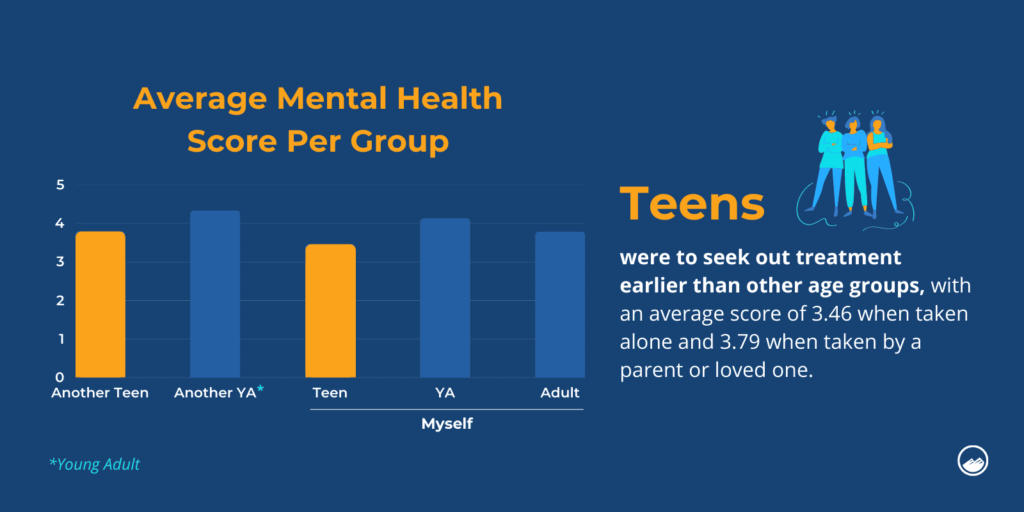
Research consistently shows that younger generations are taking steps towards talking more comfortably and openly about mental health than all previous generations.
The younger generations also have higher levels of mental health literacy, which allows them to have more awareness of the tell-tale signs and symptoms of mental illnesses, as well as where to go to receive support. 4
5
The Power of People Speaking Out
We’ve begun to see a rise in athletes, actors, musicians, influencers, and celebrities beginning to use their platforms and more openly speak about anxiety, depression, trauma, grief, and other mental health struggles.
This has begun to create a shift in the public view of struggles as something not to be ashamed of and something that, just like physical health, deserves to be openly seen and taken care of by those around us.
When public speakers become vulnerable and share their own experiences, it opens doors to conversations once hidden away. It helps challenge the idea that mental health only affects certain types of people. In reality, mental health affects anyone through relationships, work, school, or surroundings.
At the same time, schools, nonprofits, advocacy groups, and large corporations have invested more resources into mental health education and awareness campaigns.
Although awareness efforts aren’t perfect, they have brought light into communities. Every story shared has the potential to help someone feel less alone.
Where Stigma Still Exists
Today, people might not openly call someone “crazy,” but stigma has simply evolved and bleeds through cracks of the more subtle comments and assumptions.
These statements can include:
-
-
• “You’re just attention seeking”
-
-
-
• “It’s really not that bad”
-
-
-
• “Everyone is stressed”
-
-
-
• “You don’t seem depressed”
-
-
-
• “You have so much to be grateful for”
-
While society has become more accepting of conversations around anxiety, stress, and “mental health matters” stickers, stigma often remains around the more difficult topics such as trauma, suicide, or eating disorders.
The reality is that mental health isn’t always pretty, and social media plays a huge role in romanticising the things that shouldn’t be. Some struggles may be harder to understand than others, but that doesn’t mean it should be avoided.
Behind every statistic we hear about, there is a truly hurting person who deserves to feel seen, loved, and understood.
Self Stigma
Perhaps the most difficult form of stigma isn’t coming from other people at all. It comes from oneself.
Self stigma occurs when individuals internalize the negative beliefs surrounding mental health and begin applying it to themselves. 6
We are often our own worst inner critic after all. Many people are far kinder to others than they are to themselves.
Even those who support mental health awareness may struggle internally with thoughts such as:
“Other people have it worse”
“I’m simply being dramatic”
“I should handle this on my own”
“If I tell someone, they’ll think of me differently”
These thoughts can create shame, delay seeking help, and lower self esteem. Breaking stigma means challenging the messages we absorb, not just ones repeated by society, but also the ones we repeat in our own minds.
How Can We Really Reduce Stigma?
-
-
• Listen without judgement
-
-
-
• Learn about mental health from reliable sources
-
-
-
• Encourage seeking help from professionals and trusted adults
-
-
-
• Share our experiences when it feels safe
-
-
-
• Challenge misconceptions
-
-
-
• Support friends and family with empathy
-
-
-
• Create spaces where people feel heard
-
The Importance of Language and Everyday Conversations
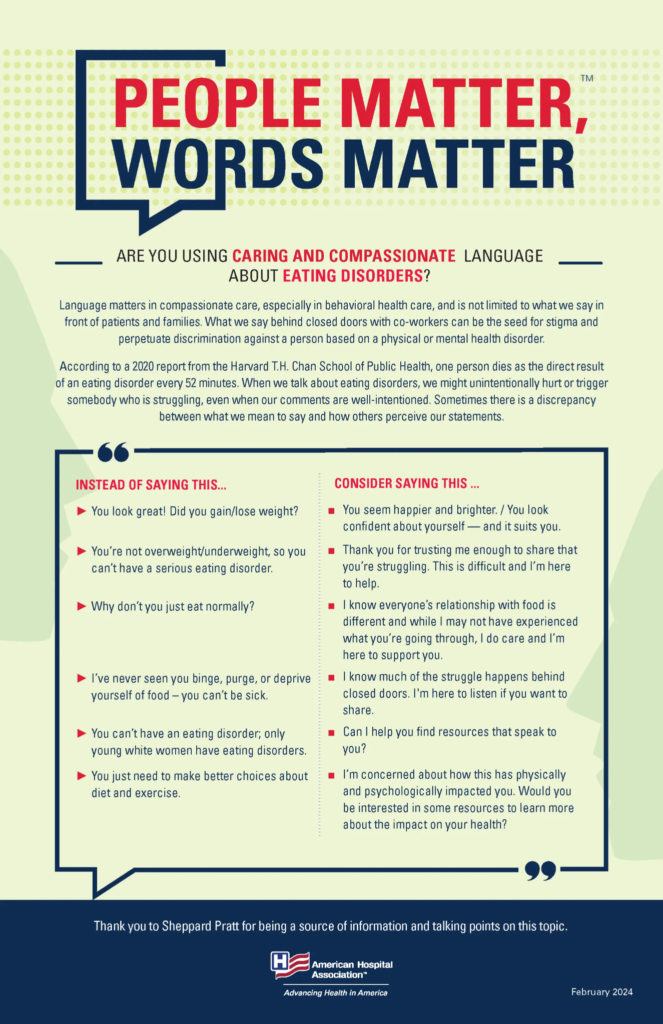
The words we choose to use every day matter a lot when it comes to mental health.
One simple approach in choosing the right words is person-first language, which focuses on people’s abilities and not their limitations. 7
A person’s mental health condition does not define who they are. The language we use should reflect that by always putting the person first.
8
Our goal shouldn’t be to simply make mental health more visible.
Our goal should be to create a world where people feel safe enough to seek help without the fear of judgement and no longer feel the need to struggle silently.
Mental health matters, but more importantly, YOU matter.
“Don’t let this darkness fool you. All lights turned off can be turned on.”
-Call Your Mom, Noah Kahan
1 World Health Organization. (2025, September 2). Over a billion people living with mental health conditions – services require urgent scale-up. Who.int; World Health Organization: WHO. https://www.who.int/news/item/02-09-2025-over-a-billion-people-living-with-mental-health-conditions-services-require-urgent-scale-up
2 CDC. (2025, June 9). Mental Health Stigma. Centers for Disease Control and Prevention. https://www.cdc.gov/mental-health/stigma/index.html
3 Rössler, W. (2016). The Stigma of Mental Disorders. EMBO Reports, 17(9), 1250–1253. National Library of Medicine. https://doi.org/10.15252/embr.201643041
4 Baral, S. P., Prasad, P., & Raghuvamshi, G. (2022). Mental Health Awareness And Generation Gap.
Indian Journal of Psychiatry, 64(Suppl 3), S636. https://doi.org/10.4103/0019-5545.341859
5 Mental Health Statistics 2023. (n.d.). Sandstone Care.
https://www.sandstonecare.com/mental-health-statistics-2023/
6 Self-Stigma. (2024, July 18). David L Vogel. https://faculty.sites.iastate.edu/dvogel/self-stigma
7 National Institutes of Health. (2022, August 11). Person-first and Destigmatizing Language. National Institutes of Health (NIH). https://www.nih.gov/nih-style-guide/person-first-destigmatizing-language
8 People Matter, Words Matter. (2020). Wyomingdoctors.org.
https://www.wyomingdoctors.org/people-matter-words-matter


